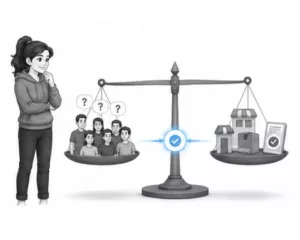
When people first hear about affiliate marketing, it often sounds too good to be true.
“You recommend a product, someone buys it, and you earn a commission?”
Naturally, that raises questions. Is it legitimate? Does it actually work? Do you have to become a salesperson or constantly convince people to buy things they don’t need?
The reality is much simpler than many beginners expect.
Affiliate marketing isn’t about pushing products or chasing commissions. At its core, it’s simply a way of connecting people with products or services that genuinely solve a problem they’re already trying to solve. If someone finds your recommendation helpful and decides to purchase through your link, the company thanks you by paying a small commission.

Can You Really Earn Money by Recommending Products?
Think about how often you’ve recommended a book, a restaurant, a useful app, or a piece of equipment to a friend. Affiliate marketing follows the same principle, except online businesses can track where the recommendation came from and reward the person who made it.
The important part isn’t the commission. The important part is helping people make better decisions. When you consistently provide honest recommendations, trust grows naturally, and trust is what makes affiliate marketing work over the long term.
In this guide, we’ll look at how affiliate marketing actually works, why it’s one of the most common online business models, and how to approach it in a way that puts your audience first.
How Affiliate Marketing Works in Simple Terms
Affiliate marketing might sound technical at first, but the process is surprisingly straightforward. At its heart, it’s simply a partnership between three people: a business, someone who recommends its products, and a customer looking for a solution.
Imagine you’ve written an article explaining how to choose the right hiking backpack. Throughout the guide, you genuinely recommend a backpack you’ve researched or personally use because you believe it’s a great fit for your readers. If someone clicks your recommendation and decides to buy it, the company records that your website introduced the customer and pays you a small commission.
The customer doesn’t pay anything extra. The product costs exactly the same as it would have otherwise. The commission comes from the company’s marketing budget as a way of rewarding people who help introduce new customers.
This is why affiliate marketing works so well alongside educational content. Readers are already looking for trustworthy advice. When your recommendation naturally supports the information you’ve shared, it becomes part of helping them solve their problem rather than simply trying to make a sale.
The better your content helps people make informed decisions, the more naturally affiliate marketing fits into your website.
The Affiliate Marketing Process
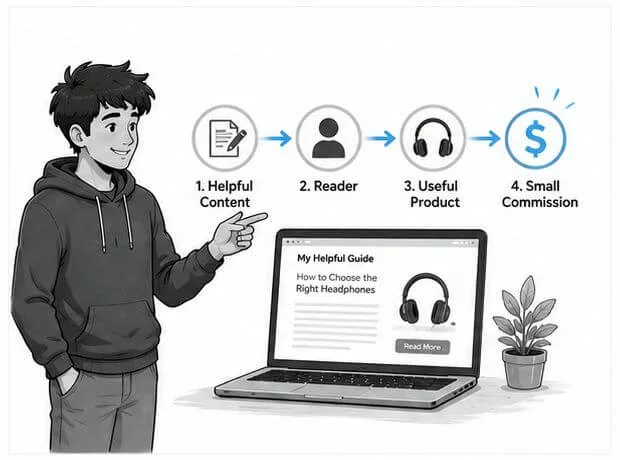
It can be simplified into four basic steps:
- You create genuinely helpful content around a topic.
- You recommend a relevant product or service that supports your reader’s goal.
- A visitor clicks your affiliate link and decides to make a purchase.
- The company pays you a commission for introducing the customer.
Notice that selling isn’t the focus. Helping is.
Key Takeaway
Affiliate marketing works best when the recommendation is a natural extension of your content.
Help people first.
If a product genuinely supports that goal, recommending it becomes part of the solution,not the purpose of the article.
Understanding the process is one thing, but why do companies pay commissions in the first place? The answer explains why affiliate marketing has become one of the most common business models on the internet and why it benefits everyone involved when done ethically.
Why Companies Are Happy to Pay Affiliate Commissions
At first glance, affiliate marketing can seem unusual. Why would a business willingly pay someone a commission after making a sale?
The answer is surprisingly simple: affiliate marketing is a form of performance-based marketing. Instead of paying for advertising that may or may not produce results, companies only pay when an actual sale happens.
Imagine a company launching a new product. They could spend thousands of dollars on advertising without knowing whether anyone will buy it. Or they can partner with content creators, bloggers, and educators who already have the trust of their audiences. If one of those recommendations leads to a sale, paying a commission becomes a cost-effective way to gain a new customer.
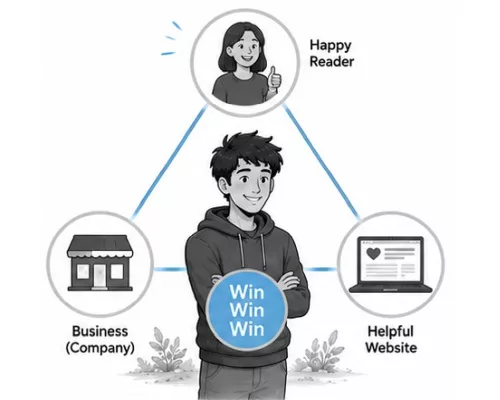
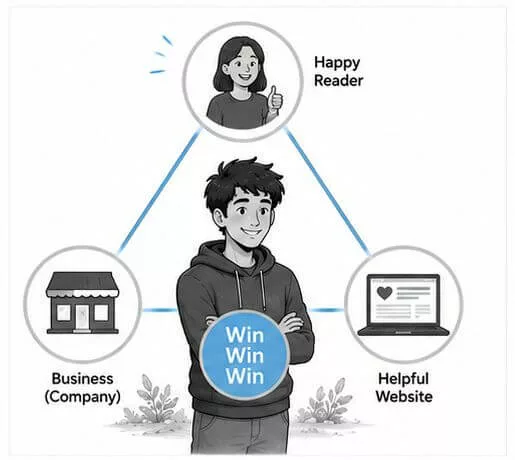
It’s a win for everyone involved.
The customer discovers a product that solves a real problem.
The business gains a new customer.
The website owner is rewarded for making a helpful recommendation.
This is why affiliate marketing has become one of the most widely used business models on the internet. It aligns everyone’s interests—as long as the recommendation is honest and genuinely useful.
Trust Is the Real Currency
The most successful affiliate websites don’t recommend everything they can find. Instead, they build long-term trust by recommending products that genuinely fit the reader’s needs.
That trust takes time to earn but can disappear very quickly if readers feel they’re being sold to instead of helped. This is why experienced website owners often recommend fewer products, not more. Every recommendation should strengthen your credibility rather than weaken it.
✓ Why Affiliate Marketing Benefits Everyone
- Readers discover products that genuinely solve their problems.
- Businesses gain new customers without paying upfront advertising costs.
- Website owners are rewarded for creating helpful content.
- Recommendations naturally support educational articles.
- Everyone benefits when trust remains the priority.
Common Beginner Mistake
Many beginners believe affiliate marketing is about placing as many affiliate links as possible.
In reality, the opposite is usually true.
A handful of thoughtful, well-explained recommendations will almost always outperform dozens of links that don’t genuinely help the reader.
Knowing why affiliate marketing works is helpful, but how should beginners actually approach it? In the next section, we’ll look at the mindset that builds long-term trust and naturally leads to sustainable affiliate income without feeling pushy or sales-driven.
Focus on Helping First, Recommending Second
One of the biggest reasons beginners struggle with affiliate marketing is that they focus on earning commissions before they’ve earned trust.
The most successful affiliate websites rarely begin by asking, “How can I sell this product?” Instead, they ask a much more valuable question:
“How can I help someone solve this problem?”
When your content genuinely answers questions, compares options honestly, or explains how something works, recommendations become a natural next step rather than the main objective. Readers appreciate guidance that helps them make informed decisions, especially when it’s clear that you’re putting their needs ahead of potential commissions.
This approach also creates a stronger long-term business. A single commission might earn a few dollars today, but a reader who trusts your advice may return to your website for years, recommend it to friends, and continue relying on your content whenever they need help.
That’s why trust is one of the most valuable assets you can build online. It’s difficult to earn, easy to lose, and far more valuable than any single sale.
✓ A Beginner-Friendly Approach to Affiliate Marketing
- Create genuinely helpful content before thinking about monetization.
- Recommend products only when they naturally support your reader’s goal.
- Explain why you recommend something instead of simply adding a link.
- Be honest about both the strengths and limitations of products.
- Think about building long-term trust rather than short-term commissions.
Readers remember honesty far longer than they remember advertisements.
Try This Today
Think about a product, tool, or service you’ve personally found useful.
Instead of asking “How could I sell this?”, ask “What problem does this solve, and who would genuinely benefit from it?”
If the recommendation naturally improves your content, you’ve already adopted the right mindset.
Think about a product, tool, or service you’ve personally found useful. Instead of asking “How could I sell this?”, ask “What problem does this solve, and who would genuinely benefit from it?” If the recommendation naturally improves your content, you’ve already adopted the right mindset.

By now, you’ve probably noticed that successful affiliate marketing isn’t really about affiliate links at all: it’s about becoming a trusted source of helpful information. Let’s finish by looking at why that mindset creates the strongest foundation for long-term online income.
Trust Is What Turns Recommendations Into Income
If there’s one thing I’d like you to remember from this guide, it’s this: affiliate marketing is built on trust, not persuasion.
People don’t visit your website hoping to be sold something. They visit because they’re looking for answers, guidance, or solutions to a problem. When your content consistently helps them make better decisions, your recommendations naturally become more valuable because they’re based on credibility rather than marketing.
The most successful affiliate websites rarely try to promote everything. Instead, they focus on recommending products they genuinely believe will benefit their readers. That approach may seem slower at first, but it creates something far more valuable than quick commissions: a loyal audience that returns whenever they need reliable advice.
Affiliate income is simply the result of creating helpful content, building trust, and recommending solutions when they’re genuinely appropriate. The commission is the outcome, not the objective.
As your website grows, your recommendations become part of a much bigger picture. You’re no longer just sharing links; you’re helping people solve real problems while building a business based on honesty, expertise, and long-term relationships.
A Thought to Remember
The best affiliate marketers don’t build businesses around products; they build businesses around helping people.
Products simply become one of the tools they recommend along the way.
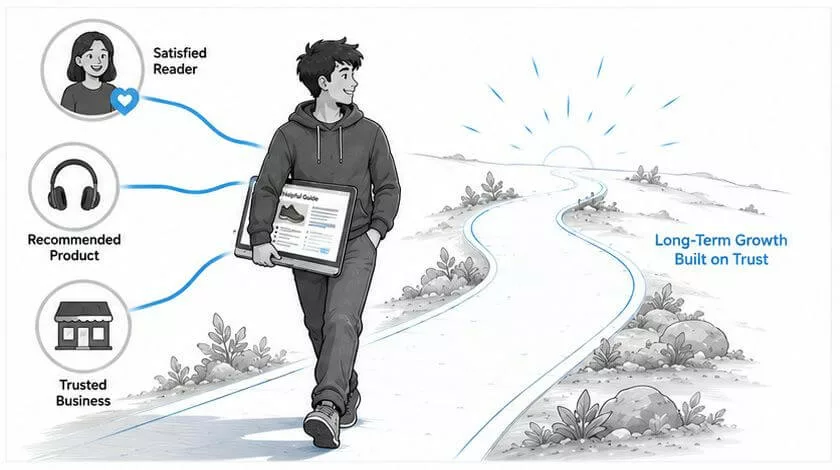
Ready to Build a Business That Helps People First?
Affiliate marketing isn’t a shortcut to making money online; it’s one part of a much bigger journey. When you focus on helping people, building trust, and creating valuable content, recommendations become a natural extension of the work you’re already doing.
That’s exactly why I created the Free 4-Step Roadmap. It walks you through the complete beginner journey, from choosing your direction and building your website to attracting visitors and creating sustainable revenue streams through trust-based strategies.
Start the Free 4-Step Roadmap →Continue Your Learning
- Can I Build a Business Around My Hobby?

- Is SEO Still Worth Learning Today?

- What Are the Biggest Mistakes New Affiliate Marketers Make?

- When Can I Expect to Earn My First Dollar Online?

- Can I Build an Online Business While Working Full-Time?

- How Difficult Is It to Build Your First Website?
- What's the Difference Between a Website, Blog, and…
- How Do I Know If a Niche Is Profitable?