

If you’ve spent any time researching online business, you’ve probably seen headlines claiming:
“SEO is dead.”
“Search engines don’t matter anymore.”
“Artificial intelligence has replaced SEO.”
For a beginner, those messages can be confusing.
If SEO no longer works, why do millions of people still discover new websites through search engines every day?
The truth is much less dramatic.

Has SEO Become Obsolete?
SEO hasn’t disappeared.
It has matured.
Years ago, it was sometimes possible to rank websites using shortcuts, keyword stuffing, or low-quality content created primarily for search engines. Modern search engines have become much better at recognizing genuinely helpful, trustworthy content and rewarding websites that consistently provide value.
That’s actually good news for beginners.
Instead of trying to “game the algorithm,” you can focus on something much simpler, and much more sustainable:
Helping people.
When your content clearly answers real questions, solves genuine problems, and provides useful information, you’re already practicing the most important principle of modern SEO.
In this guide, we’ll explore what SEO really means today, why it continues to matter, and how beginners can learn it naturally while building a website people genuinely enjoy visiting.
SEO Starts With Helping People, Not Algorithms
When many people hear the term SEO, they imagine complicated technical settings, endless keyword research, or trying to outsmart search engines.
That’s an outdated view of how SEO works.
At its core, SEO simply means making your content easier for people to discover when they’re searching for answers online.
Imagine someone asks a question like:
“How do I choose my first website niche?”
If you’ve written a clear, helpful article that answers that exact question, search engines have something valuable to recommend.
That’s the real purpose of SEO.
It’s not about convincing search engines to rank poor content.
It’s about helping search engines understand that your content deserves to be found because it genuinely helps people.
That’s why great SEO begins long before you think about keywords or page titles.
It begins by understanding what questions your audience is asking and creating the best answer you can.
Helpful Content Comes First
The strongest SEO strategy isn’t writing for search engines.
It’s writing for real people who have real questions.
When your articles solve problems clearly and honestly, search engines have a much easier time recognizing their value.
Keywords Help People Find Answers
Keywords aren’t magic words that improve rankings.
They’re simply the phrases people type into search engines when looking for information. Understanding those phrases helps you write content that matches the questions your audience is already asking.
✓ What Modern SEO Really Focuses On
- Answering real questions clearly.
- Creating trustworthy, helpful content.
- Organizing information in an easy-to-read format.
- Improving the overall experience for your readers.
- Building a website people genuinely want to visit.
Notice that every one of these focuses on helping people, not manipulating search engines.
Key Takeaway
Think of SEO as communication rather than optimization.
Your goal is simply to make it easier for search engines to understand who your content helps and why it deserves to be discovered.

Good SEO and Good Content Work Together
One of the biggest mistakes beginners make is treating SEO and content as two separate tasks.
First they write an article.
Then they try to “add SEO” afterward.
In reality, the two work best when they’re created together.
If you understand the questions your audience is asking before you begin writing, you’ll naturally create content that’s both helpful for readers and easier for search engines to understand.
For example, choosing a clear title, organizing your article with logical headings, and answering the main question early all improve the experience for your readers.
As a bonus, they also make it easier for search engines to recognize what your article is about.
That’s why good SEO often feels invisible.
Readers simply experience an article that’s well organized, easy to follow, and genuinely useful.
Search engines notice those same qualities.
Instead of thinking about SEO as a separate checklist, think of it as part of creating the best possible learning experience for your audience.
Write for Humans First
If your content is easy for a beginner to understand, you’ve already accomplished one of the most important goals of modern SEO.
Structure Helps Everyone
Clear headings, logical sections, and simple language don’t just improve rankings, they help real people find the information they’re looking for more quickly.
✓ Simple SEO Habits Every Beginner Can Learn
- Answer one main question per article.
- Use clear, descriptive headings.
- Write naturally instead of forcing keywords.
- Organize information into logical sections.
- Update helpful content as you learn more.
Small improvements like these benefit both your readers and your long-term visibility.
Common Beginner Mistake
Don’t write articles for search engines and hope people enjoy them later.
Write articles that genuinely help people first, then use SEO to make those helpful resources easier to discover.

Now that you’ve seen what SEO really means today, the final sections will show why learning the basics is still one of the best long-term investments you can make, and why the websites that consistently help people continue benefiting from SEO year after year.
Learn SEO as You Build, Not Before You Begin
If there’s one thing I’d like you to remember from this guide, it’s this:
You don’t need to become an SEO expert before you start building your website.
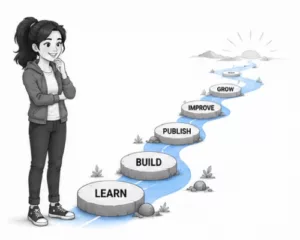
In fact, the best way to learn SEO is by creating content, publishing articles, and gradually improving them over time.
Every article teaches you something.
You’ll begin noticing which questions people ask most often, how readers interact with your content, and how small improvements make your articles easier to understand.
Those lessons are far more valuable than trying to memorize hundreds of SEO techniques before you’ve written your first article.
Modern SEO rewards experience.
The more helpful content you create, the more opportunities you have to learn what works for your audience.
That’s why SEO should feel like an ongoing skill, not a one-time task.
As your website grows, your understanding of SEO grows with it.
Small Improvements Create Big Results
You don’t need to optimize everything perfectly from the beginning. Improving one article at a time is often far more effective than trying to perfect your entire website overnight.
Keep Learning Alongside Your Website
SEO continues evolving because the internet continues evolving. Fortunately, the most important principle remains remarkably consistent:
Create content that genuinely deserves to be found.
✓ A Beginner-Friendly SEO Mindset
- Help people before trying to rank.
- Learn one improvement at a time.
- Write naturally and clearly.
- Keep updating your best articles.
- Focus on long-term trust instead of short-term tricks.
Those habits rarely go out of date.
Try This Today
The next time you write an article, don’t ask:
“How do I make Google rank this?”
Instead ask:
“If someone searched this question today, would my article genuinely help them?”
If the answer is yes, you’re already practicing the most important part of modern SEO.

SEO Is Worth Learning: Because People Still Need Answers
Search engines may continue evolving.
Artificial intelligence will continue changing how people discover information.
New technologies will reshape the internet in ways we can’t fully predict.
But one thing is unlikely to change:
People will continue searching for trustworthy answers to real questions.
That’s why SEO remains valuable.
Not because it’s about algorithms or rankings, but because it’s about connecting helpful people with those who need their knowledge.
If you focus on creating honest, useful, and well-organized content, you’ll always be building something worthwhile.
Search engines are simply one of the ways people discover that value.
Don’t think of SEO as a game you have to win.
Think of it as a communication skill that helps your best work reach the people who need it most.
A Thought to Remember
The purpose of SEO isn’t to convince search engines your content is valuable.
It’s to help search engines recognize the value that’s already there.

Ready to Build a Website People Can Actually Find?
Learning SEO doesn’t mean chasing algorithms; it means learning how to create helpful content that people can easily discover. When you combine genuine value with good structure and consistency, you’re building a website that can continue growing for years.
That’s exactly what the Free 4-Step Roadmap is designed to help you do. It guides you from choosing your direction and building your website to attracting visitors and creating sustainable revenue streams, one practical step at a time.
Start the Free 4-Step Roadmap →Continue Your Learning
- Why Isn't Anyone Visiting My Website Yet?

- How Long Does It Take to Build an Online Business?
- What's the Difference Between a Website, Blog, and…

- Do I Really Need a Website to Make Money Online?

- How Often Should I Publish New Content?

- How Do I Choose a Niche Without Regretting It Later?

- What Are the Biggest Mistakes New Affiliate Marketers Make?

- How Can I Tell If an Online Opportunity Is a Scam?