Many beginners assume owning a website costs hundreds, or even thousands, of dollars every year.
It’s an understandable concern.
After all, you hear about expensive software, premium tools, marketing platforms, and countless online subscriptions.
The good news is that a beginner website doesn’t need most of those things.

Is Owning a Website Expensive?
In fact, many successful websites start with only a few essential expenses.
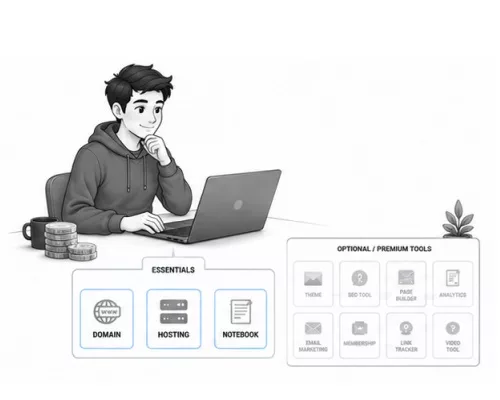
Typically, that’s your domain name, web hosting, and a handful of free tools to help you create and manage your content.
Everything else can come later if your website grows to the point where additional tools genuinely save you time or improve the experience for your visitors.
The mistake many beginners make is believing they need to build the “perfect” website from day one.
They end up paying for features they’ll never use.
A much smarter approach is to start simple, learn as you grow, and invest gradually as your website develops.
In this guide, we’ll look at the typical costs of owning a website, which expenses are truly necessary, and how to avoid spending money on tools you don’t actually need.
The Essential Costs Every Website Needs
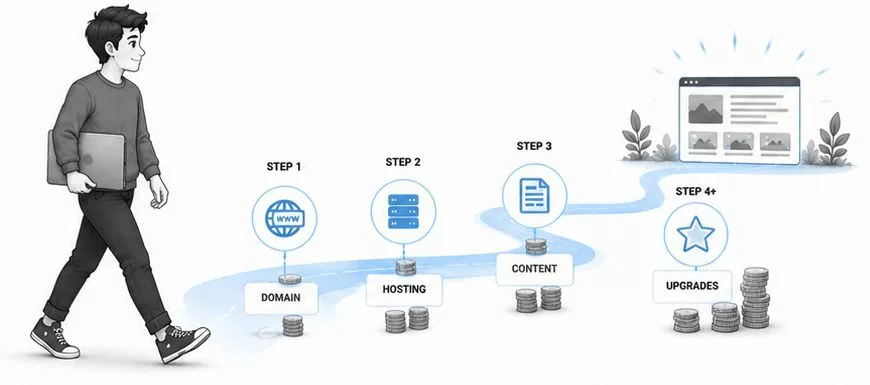
When you strip away all the marketing and endless software recommendations, every website only needs a few basic ingredients to exist.
The first is a domain name.
This is your website’s address on the internet, the name people type into their browser to visit your site.
The second is web hosting.
Think of hosting as the place where your website lives. It stores your pages, images, and other files so visitors can access them online.
Together, these two expenses make your website accessible to the world.
Beyond that, most beginners can accomplish an incredible amount using free software and built-in tools.
Content management systems like WordPress, free themes, and many basic plugins provide everything needed to build a clean, professional website.
As your business grows, you may eventually decide to invest in premium tools that save time or add new features.
But those upgrades should support your growth, not replace it.
The website itself comes first.
The extras can wait.
Your Domain Is Your Online Address
A good domain name is memorable, easy to spell, and reflects your brand. Once registered, you simply renew it each year to keep ownership.
Hosting Keeps Your Website Available
Every website needs hosting, but beginners don’t need the most expensive plan. A reliable entry-level hosting package is usually more than enough while your website is growing.
✓ Essential Website Costs
- Domain name
- Web hosting
- A content management system (often free)
- A theme (many excellent options are free)
- Basic plugins as needed (many are also free)
That’s enough to build a professional website and start publishing helpful content.
Key Takeaway
A successful website isn’t built by buying lots of software.
It’s built by consistently creating valuable content on a solid foundation.
Spend More Only When Your Website Grows
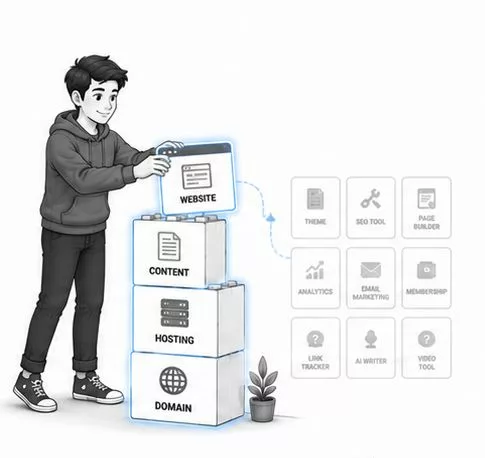
One of the biggest advantages of building an online business is that your expenses can grow alongside your success.
You don’t need every premium tool on day one.
In fact, buying too many tools too early often creates unnecessary complexity.
Many beginners spend more time learning software than actually building their website.
A better approach is to ask a simple question before purchasing anything:
“Will this help me serve my visitors better today?”
If the answer is no, you can probably wait.
As your website grows, your needs may naturally change.
You might upgrade your hosting because your traffic has increased.
You may purchase a premium plugin because it saves hours of work each month.
Or you might invest in a professional email service once your audience becomes large enough to benefit from it.
Those are sensible upgrades because they’re solving real problems, not imaginary ones.
Let your website earn those investments.
Free Tools Can Take You Surprisingly Far
Many successful websites began with free themes, free plugins, and simple workflows. Don’t underestimate what you can accomplish before spending additional money.
Buy Solutions, Not Features
Premium tools are most valuable when they solve a problem you’re already experiencing. Buying software “just in case” often leads to wasted money and unnecessary complexity.
✓ A Smart Spending Mindset
- Start with the essentials.
- Use free tools whenever practical.
- Upgrade only when there’s a clear benefit.
- Invest gradually as your website grows.
- Focus on creating value before expanding your toolkit.
This approach keeps your costs manageable while allowing your website to develop naturally.
Common Beginner Mistake
Don’t assume expensive software will make your website successful.
Helpful content, consistent effort, and a positive visitor experience matter far more than owning dozens of premium tools.
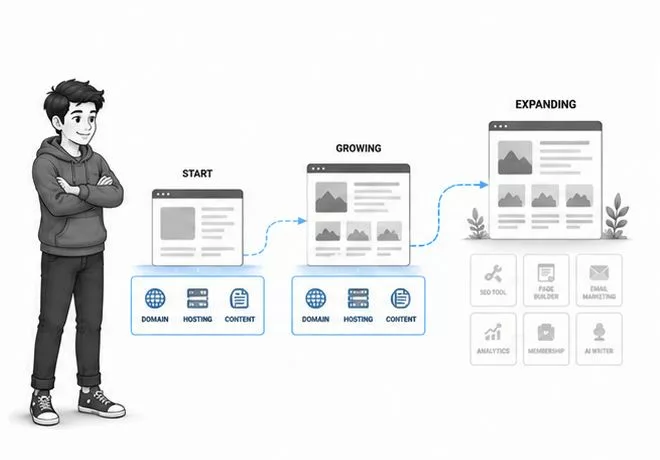
Now that you’ve seen which website costs are truly essential, the final sections will explore why keeping your expenses low is actually an advantage, and how investing gradually helps you build a stronger, more sustainable online business.
Your Biggest Investment Isn’t Money
If there’s one thing I’d like you to remember from this guide, it’s this:
The biggest investment in your website won’t be your wallet; it will be your commitment.
Most beginners spend far more time worrying about costs than they ever spend paying them.
In reality, the ongoing expenses of owning a website are usually quite manageable.
The harder part is showing up consistently.
Writing helpful articles.
Learning new skills.
Improving your content.
Listening to your audience.
Those are the investments that often determine whether a website succeeds.
Money can certainly buy useful tools.
But it can’t buy experience.
It can’t buy trust.
And it can’t replace the steady progress that comes from consistently creating something valuable.
That’s why starting with a simple, affordable website is often an advantage.
It encourages you to focus on the things that truly matter.
Build First, Upgrade Later
Your website doesn’t need every premium feature from the beginning. It simply needs a solid foundation and someone willing to keep improving it.
Let Your Website Earn Bigger Investments
As your audience grows, you’ll naturally discover tools and services that genuinely save time or improve your visitors’ experience. That’s the ideal time to invest, when there’s a clear reason to do so.
✓ Focus on What Really Builds a Website
- Publish helpful content consistently.
- Learn a little with every article.
- Improve your website over time.
- Spend carefully and intentionally.
- Invest in tools only when they solve real problems.
The strongest websites grow through steady improvements, not through large upfront spending.
Try This Today
Make two simple lists:
Essential now
- Domain name
- Web hosting
- Your website
- Your first article
Can wait until later
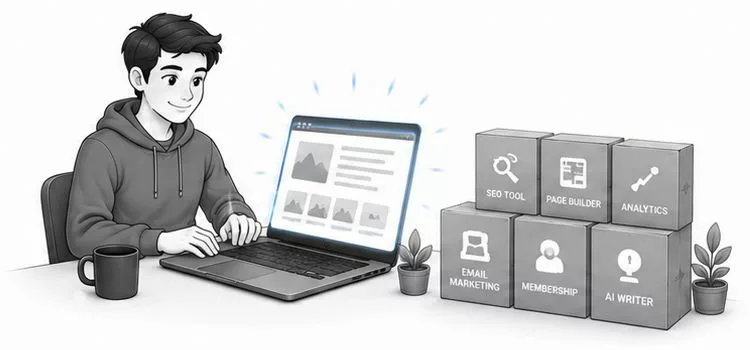
- Premium software
- Advanced marketing tools
- Extra design features
- Automation platforms
Start with the first list. Your future website can earn the second.
Start Simple and Grow With Confidence
One of the greatest advantages of building an online business is that you don’t need to build everything at once.
Your website can grow step by step.
Your knowledge can grow alongside it.
Your audience can grow with every helpful article you publish.
The same is true for your expenses.
There’s no prize for owning the most expensive software or the longest list of subscriptions.
Visitors don’t choose your website because of the tools you pay for.
They return because your content is useful.
That’s why successful website owners focus first on creating value.
The tools come later.
The upgrades come later.
The business grows naturally because every investment has a purpose.
Start with the essentials.
Learn as you go.
And allow your website to become more capable as your experience grows.
A Thought to Remember
The best time to buy a new tool isn’t when someone recommends it.
It’s when your website has grown enough to genuinely need it.
Ready to Build a Website Without Overspending?
Building a website doesn’t require a huge budget. It requires a solid foundation, realistic expectations, and a commitment to helping people through valuable content. Start with the essentials, improve steadily, and let your website grow before investing in additional tools.
That’s exactly what the Free 4-Step Roadmap is designed to help you do. It walks you through choosing your direction, building your website, attracting visitors, and creating sustainable revenue streams, without spending money on things you don’t need.
Start the Free 4-Step Roadmap →Continue Your Learning
- What Makes a Good Beginner Niche?

- Do I Need to Be Good With Computers?

- Can I Build a Business Around My Hobby?

- How Do I Choose a Niche Without Regretting It Later?

- What Pages Does Every Beginner Website Actually Need?
- Can I Really Start an Online Business Without Any…

- Where Does Website Traffic Actually Come From?
- What Should I Do After My Website Is Finally Live?